
Mandevilla Care Guide: Watering, Sunlight, Soil, Pests, Pruning and Fertilizing
Mandevillas look glamorous, but they are not fussy once their basic needs are met. Give them warmth, bright light, free-draining soil and steady care, and they reward you with glossy leaves, twining stems and trumpet-shaped flowers for months.
These tropical climbers suit pots, balconies, patios, fences and garden arches. In warmer parts of Australia, they can grow outdoors year-round. In cooler areas, they often do best in containers that can be moved to a protected spot during cold weather.
This Mandevilla care guide covers the essentials, from watering and sunlight to pests, pruning and feeding, so your plant stays healthy rather than simply surviving.

Give mandevillas the right amount of sunlight
Mandevillas love bright conditions. For strong flowering, aim for at least 6 hours of bright light each day. In many Australian gardens, morning sun with light afternoon shade works beautifully, especially during hot summers.
In cooler or milder regions, mandevillas can handle more direct sun. In very hot inland areas, harsh afternoon sun may scorch leaves or dry the potting mix too quickly. If the leaves look bleached, crispy around the edges or curled by mid-afternoon, shift the plant to a slightly kinder position.
Good spots include:
A sunny verandah with protection from hot wind
A north or east-facing wall or fence
A patio pot with a small trellis
A bright balcony that gets morning sun
A warm glasshouse or sunroom in cooler months
Mandevillas grown in too much shade usually produce lots of leaves and fewer flowers. The stems may also become long and thin as the plant stretches towards light. If this happens, move it gradually into brighter conditions rather than shifting it straight into full sun.
A simple rule helps: more light means more flowers, but extreme heat still needs managing.
Water deeply, then let the soil breathe
Mandevillas like consistent moisture, but they dislike soggy roots. The best watering routine is simple: water well, then let the top few centimetres of soil dry before watering again.
For potted mandevillas, check moisture with your finger. If the top layer feels dry and the pot feels lighter than usual, water until liquid runs from the drainage holes. Empty saucers after watering so the plant is not sitting in water.
For mandevillas in the ground, water deeply around the root zone rather than giving frequent light splashes. Deep watering encourages stronger roots and helps the plant cope better during hot spells.
Signs your mandevilla needs water
A thirsty mandevilla often tells you quickly. Watch for:
Slightly wilted leaves during the cooler part of the day
Dry potting mix pulling away from the edge of the pot
Flower buds dropping before opening
Leaves looking dull rather than glossy
Wilting during a hot afternoon does not always mean the plant is dry. Check the soil before watering. If the mix is still moist, the plant may simply be heat-stressed.
Signs you are watering too much
Overwatering causes more serious problems than underwatering. Mandevillas need oxygen around their roots, and constantly wet soil can lead to root rot.
Look for:
Yellowing lower leaves
Limp growth even when the soil is wet
A sour smell from the potting mix
Blackened or mushy stems near the base
Leaves dropping without drying first
If this happens in a pot, improve drainage straight away. Move the plant out of standing water, check the drainage holes, and repot into fresh, free-draining mix if the roots smell rotten or look mushy.

Choose free-draining soil with enough richness
Soil makes a big difference to mandevilla health. These plants prefer a mix that holds some moisture but drains freely. Heavy clay, compacted soil or cheap potting mix that turns sludgy can cause root problems.
For containers, use a premium-quality potting mix rather than garden soil. A good potting mix should feel open and crumbly, not dense. If you are planting in a large decorative pot, make sure it has proper drainage holes. A beautiful pot without drainage is a fast route to root rot.
For garden beds, improve the planting area before you put the mandevilla in. Work compost through the soil, then raise the planting area slightly if drainage is poor. In clay soils, consider growing mandevilla in a large pot instead.
What mandevillas like in soil
A good mandevilla mix should be:
Free-draining
Moderately rich in organic matter
Slightly acidic to neutral
Loose enough for roots to spread
Moisture-holding without staying wet
Mulch can help keep roots cool and reduce water loss, especially in warm climates. Use a light organic mulch, such as sugar cane mulch or fine bark, and keep it a few centimetres away from the main stem. Mulch piled against the stem can trap moisture and invite disease.
Feed for flowers, not just leaves
Mandevillas are steady growers through the warm months, and flowering takes energy. Regular feeding helps keep growth strong and blooms coming.
Start feeding in spring when new growth appears. Use a balanced fertiliser or a flowering plant fertiliser, following the label directions. In pots, a controlled-release fertiliser can provide a good base, with occasional liquid feeding through the growing season.
Avoid heavy feeding in winter, especially in cooler regions. Growth slows when temperatures drop, and unused fertiliser can build up in the potting mix. Too much fertiliser may lead to soft leafy growth, brown leaf tips or fewer flowers.
A simple feeding rhythm works well:
Season | What to do |
Spring | Start feeding when new shoots appear |
Summer | Feed regularly while the plant is growing and flowering |
Autumn | Reduce feeding as nights cool |
Winter | Pause or feed very lightly only if the plant is still active |
If your mandevilla has lush leaves but few flowers, check light before adding more fertiliser. Low light is often the real cause.
Prune to shape the plant and encourage fresh growth
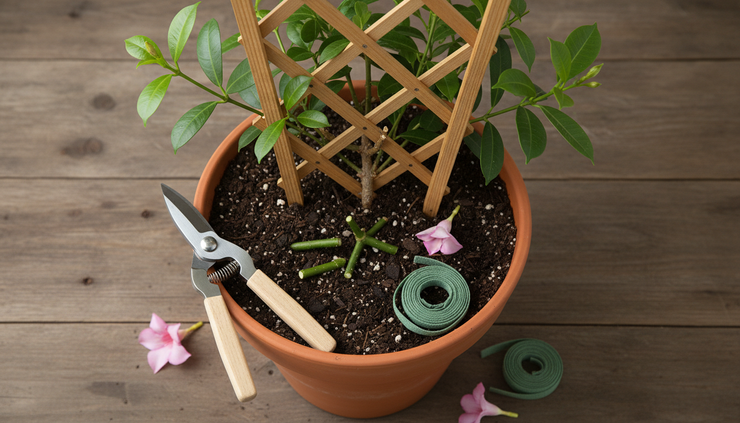
Mandevillas flower on new growth, so thoughtful pruning helps create a fuller, more floriferous plant. The best time for a main prune is late winter or early spring, before strong new growth begins.
Wear gloves when pruning. Mandevilla stems contain milky sap that can irritate skin, and the plant should be kept away from pets that like to chew leaves or stems.
Use clean, sharp secateurs and remove:
Dead, damaged or diseased stems
Thin, weak or tangled growth
Stems growing in the wrong direction
Old flowering stems that make the plant look crowded
You can shorten long stems to encourage branching. If the plant has become leggy, cut it back gradually rather than removing too much at once. A healthy established mandevilla can usually handle a firm tidy-up, but a stressed plant needs gentler treatment.
Train climbing mandevillas early
Mandevillas are natural climbers, but they still benefit from guidance. Tie young stems loosely to a trellis, obelisk, wire frame or fence. Use soft plant ties rather than wire, which can cut into stems.
Check ties every few weeks during active growth. Stems thicken over time, and tight ties can damage them.
For a bushier pot plant, pinch out the tips of young shoots. This encourages side shoots and creates a fuller display. For a taller climbing display, select a few strong stems as the main framework and train them upward.
Watch for common pests before they spread
Mandevillas can attract sap-sucking pests, especially in warm, sheltered spots. Catching them early makes treatment much easier.
Check the undersides of leaves, soft new shoots and stem joints. Pests often hide where growth is tender or crowded.
Aphids
Aphids cluster on new shoots and flower buds. They may be green, black, brown or yellow. They suck sap and can leave sticky honeydew, which may lead to sooty mould.
Treatment is usually straightforward. Spray the plant with water to knock aphids off, then treat remaining clusters with insecticidal soap or horticultural oil. Repeat as needed, following the product label.
Mealybugs
Mealybugs look like small white cottony clumps. They hide in leaf joints, under leaves and along stems. They weaken plants over time and can be stubborn if ignored.
For small numbers, dab them with a cotton bud dipped in methylated spirits, avoiding excessive contact with tender plant tissue. For larger infestations, use horticultural oil and repeat treatment because eggs and hidden insects may survive the first round.
Scale
Scale insects appear as small brown, tan or white bumps stuck to stems and leaves. They may not look alive, but they feed under their protective shells.
Scrape off small patches gently with a fingernail or soft brush. Treat heavier infestations with horticultural oil, making sure to cover stems and leaf undersides.
Spider mites
Spider mites are tiny and often appear during hot, dry weather. Signs include fine webbing, speckled leaves and a dusty look on foliage.
Increase humidity around the plant by hosing foliage in the morning, especially under leaves. Use a miticide or horticultural oil if the problem continues. Avoid spraying oil during the heat of the day, as it can burn leaves.
Whiteflies
Whiteflies flutter up when disturbed. They gather under leaves and can weaken plants when numbers build.
Yellow sticky traps can help monitor them. Spray undersides of leaves with insecticidal soap or horticultural oil, repeating as needed. Remove badly infested leaves if the plant can spare them.
Treat diseases by fixing the growing conditions
Most mandevilla diseases are linked to moisture, airflow and drainage. A healthy plant in the right position is far less likely to struggle.
Root rot
Root rot is the most serious issue. It usually comes from poor drainage or overwatering. The plant may wilt even when wet, drop yellow leaves or collapse at the stem base.
To treat it, remove the plant from its pot and check the roots. Healthy roots are firm and pale. Rotten roots are dark, soft and may smell unpleasant. Trim away damaged roots, repot into fresh free-draining mix, and water more carefully.
If the base of the plant is badly rotted, recovery may not be possible.
Leaf spot
Leaf spot appears as brown, black or tan marks on leaves. It often worsens when foliage stays wet or plants are crowded.
Remove affected leaves and dispose of them in the bin, not the compost. Improve airflow, avoid overhead watering late in the day, and keep leaves drier. If leaf spot keeps spreading, use a suitable garden fungicide according to the label.
Powdery mildew
Powdery mildew looks like pale powder on leaves. It often appears when days are warm, nights are cool, and airflow is poor.
Remove the worst leaves, improve spacing, and water at soil level. A suitable fungicide may help if the infection is active. Good light and airflow are the long-term fix.
Adjust care through the seasons
Mandevillas respond strongly to temperature. Their care should change as the year changes.
In spring, move potted plants gradually into brighter light, prune if needed, and start feeding. This is also a good time to repot if roots fill the container.
In summer, focus on watering, training and pest checks. Pots may dry fast during hot spells, especially on paving or balconies. Move plants out of extreme afternoon heat if they look stressed.
In autumn, reduce feeding and watering as growth slows. Let the plant harden up before winter.
In winter, protect mandevillas from frost. In cooler regions, move pots to a bright sheltered spot, such as a verandah, greenhouse or sunny indoor position. Water sparingly, just enough to stop the mix from becoming bone dry. Some leaf drop in cool weather is normal.

A simple mandevilla care routine
If you like a clear routine, use this as a quick reference:
Light Give bright light with several hours of sun. Protect from fierce afternoon heat in very hot areas.
Water Water deeply, then let the top few centimetres of soil dry.
Soil Use rich, free-draining soil or premium potting mix.
Feeding Feed from spring through summer while the plant is actively growing.
Pruning Prune in late winter or early spring, then trim lightly through the season.
Pest checks Inspect new growth and leaf undersides every week during warm weather.
Winter care Protect from frost and reduce watering when growth slows.
Mandevillas are generous plants when their roots stay healthy and their stems get enough light. Start with a warm, bright position and free-draining soil, then build a steady rhythm of watering, feeding, pruning and pest checks. With that foundation, your mandevilla can climb, flower and shine through the warm months with far less fuss than its tropical looks suggest.

Comments